
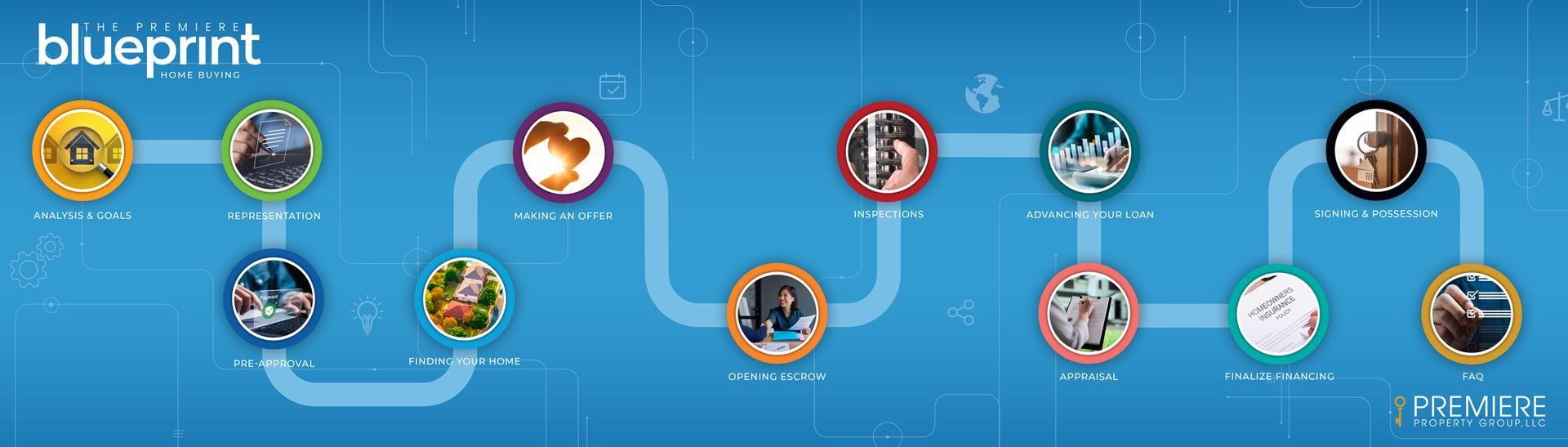

Timeline : When is the right time for you to buy? Knowing your ideal timeframe helps us create a clear action plan.
Property Search Parameters : What are you looking for in a home? While it’s natural to want to be specific, keeping some flexibility allows us to keep viable options on the table.
Needs & Objectives : Do you have unique goals beyond the basics? Whether it’s space for extended family, home office needs, or lifestyle considerations, we’ll capture it all so your search truly reflects your homebuying needs.

Buyer Representation Agreement
This agreement formalizes the working relationship between you and I, your real estate agent. It outlines the agent’s duties, how I will represent your interests, and the expectations for both parties during the home search and purchase process. By signing this agreement, you ensure that I am legally committed to acting in your best interest, negotiating on your behalf, and guiding you through each step of the transaction.
Home Buyer Advisories
These advisories are informational documents designed to educate buyers about the process, risks, and key considerations when purchasing real estate. They cover topics such as disclosure requirements, inspections, property conditions, and other legal and practical matters. While these documents do not replace professional advice, they help you make informed decisions and understand the responsibilities of homeownership and the transaction process.
Key steps include:
- Making initial contact with your mortgage advisor
- Completing the mortgage application
- Verifying funds available for your purchase
- Reviewing credit, income, and down payment
- Determine your qualified loan amount and payment that fits your budget
- Receiving an automated underwritten approval (if applicable)
- Receiving your pre-approval letter

Sometimes we can set up a search before your pre-approval (especially if you’re confident in your ability to qualify) for informational purposes. However, it’s important to get pre-approved soon after and definitely before we begin touring homes. To start this process, we’ll need to narrow your search so we can identify potential homes to tour in person.
Key steps include:
- Fine-tuning your search criteria to focus on the right properties
- Selecting homes to tour based on your priorities and goals
- Touring homes listed for sale, evaluating layout, condition, and lifestyle fit
- Developing a strategy to visit open houses to maximize your options and be as efficient as possible in the process
- Considering For Sale By Owner (FSBO) and other unlisted homes to uncover additional opportunities
As your agent, I may have other specific ideas and tools that can help uniquely with your scenario.

Key steps include:
-
CMA (Comparative Market Analysis)
Evaluates the property’s value by comparing it to similar homes that have recently sold, called comparables or “comps”, to help you make a competitive offer.
-
Preparing the Offer
You don’t need to know every detail about the home yet. Inspections and the due diligence period will provide additional information later. We will prepare the purchase contract with key terms such as price, requested concessions, earnest money, close date, inspection period, inclusions (items remaining with the home), and other contingencies.
-
Submitting the Offer
As your agent, I will submit the offer to the listing agent along with your pre-approval letter and/or proof funds to close. 4 - Negotiations - The seller may do one of the following: Accept the offer Counter the offer, meaning they agree if you accept certain changes Reject, or let the offer expire, if it’s too far from their expectations.
-
Acceptance
Once all parties agree on terms, the official sales contract is executed and all timelines begin.

Key steps include:
-
Paperwork to Escrow
I will deliver all required documents, such as the mutually accepted sales agreement, to the escrow company.
-
Earnest Money Deposit
Funds are typically deposited using one of three methods. In-person branch drop off, mobile deposit or wire transfer directly to escrow (a phone call confirmation is a security best practice). This initial payment is a deposit that will be applied toward your purchase at closing.
-
Communication with Escrow Officer
The escrow officer acts as a neutral third party, managing funds, documents, and timelines throughout the transaction.
-
Title Research
The title officer conducts a title search to disclose the relevant items of record. You will receive a preliminary title report for review. Your escrow officer will work on clearing monetary items.
Key steps include:
-
Review Seller Disclosures
Carefully examine the Seller’s Property Disclosure Statement and any related documents provided by the seller.
-
General Home Inspection
A licensed inspector will examine both the interior and exterior of the home in detail. Buyers are encouraged to attend the latter portion of the inspection, as the final walk-through is the most critical step. A comprehensive inspection report will be provided afterward.
-
Radon Testing
Radon is a colorless, odorless, and potentially harmful gas that can seep from the ground. Testing is recommended in certain areas and elevated levels can typically be mitigated.
-
Sewer / Septic Inspection
A sewer scope or septic inspection is strongly advised, depending on the property.
-
Specialty Inspections
Additional inspections may include mold, well, or oil tank assessments.
-
Negotiations
Following inspections, a new and generally final round of negotiations may occur to address concerns. This could include repair requests or price concessions.
-
Removal of Inspection Contingencies
Once both parties agree on inspection outcomes, inspection contingencies are formally removed and the transaction takes the next step toward closing.

Moving forward with your financing
Once your offer is accepted, your mortgage advisor will begin working to finalize financing. With the inspection contingency removed, your mortgage advisor will move full speed ahead with securing your loan. In many cases, the application has already gone through an automated underwriting system during the pre-approval phase. This system evaluates your file based on credit, down payment, employment history, debt-to-income ratio, and other factors. It can provide a preliminary automated approval and a list of conditions that must be met prior to the underwriter’s review.
A skilled mortgage advisor eliminates guesswork by understanding lender guidelines and preparing your file thoroughly. This includes completing any necessary pre-underwriting during the pre-approval process so that once your offer is accepted, there are no surprises in obtaining final loan approval.
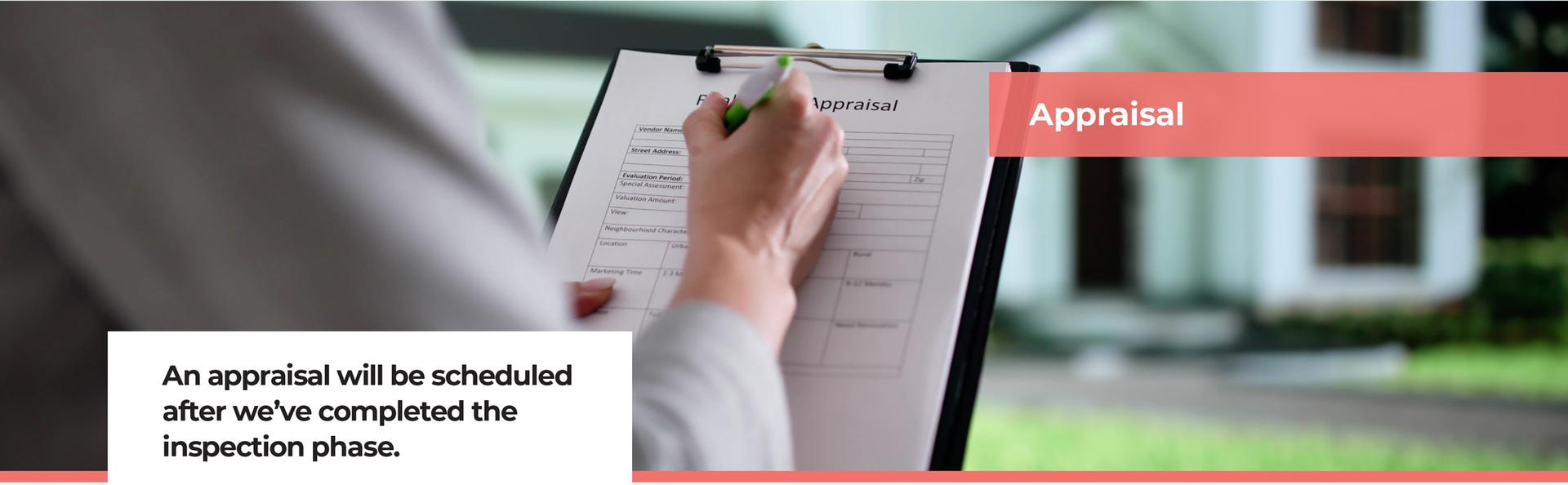
An appraisal is very often required when financing a home.
Your loan officer will typically order it as soon as inspections are complete and any agreed-upon repairs are addressed. This can help eliminate unnecessary costs should you choose not to move forward after inspections. The appraiser usually coordinates access with the agents, and it is rarely necessary or recommended for the buyer to be present.
After touring the property, the appraiser will take some time to prepare the report and submit it to the lender.

Once the underwriter has reviewed your loan file, a conditional approval will be issued. This approval typically comes with conditions that must be satisfied before closing. With a skilled mortgage advisor, there should be no surprises. Common conditions include recent pay stubs, bank statements, or other documentation. Providing these promptly ensures that closing is not delayed.
Homeowners insurance is also required. You will need to select an insurance provider and have the policy ready, often in the form of an insurance binder.
After all conditions have been satisfied and approved by the underwriter, the final loan documents will be ordered and sent to the escrow company, moving the transaction one step closer to a successful close.
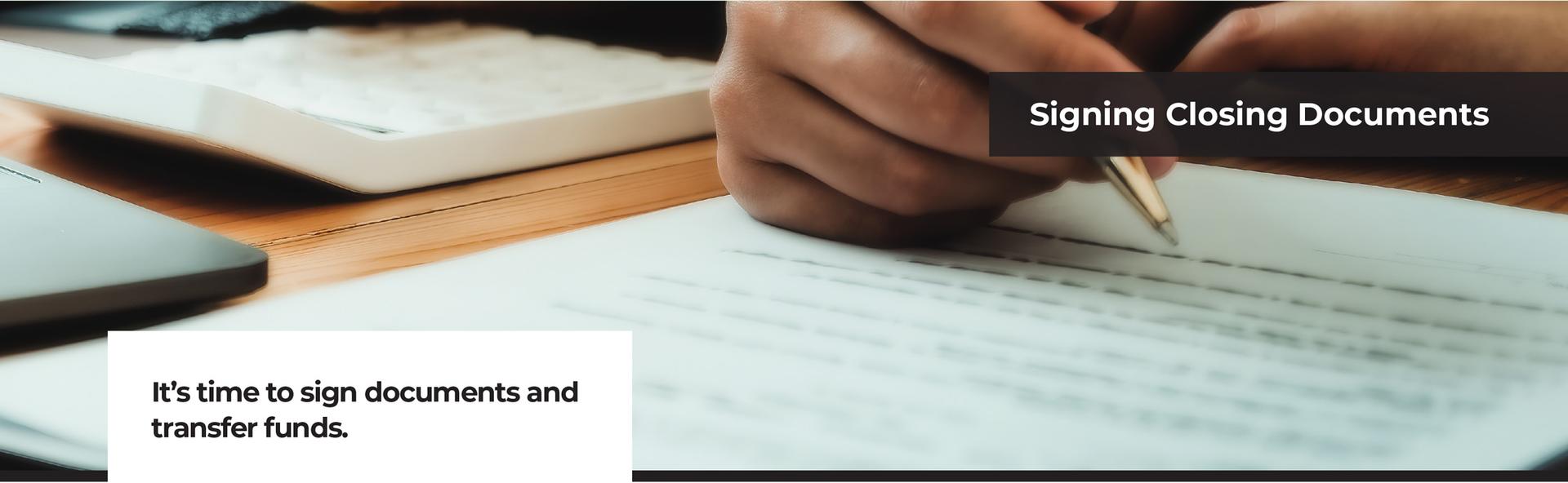
A few days before the scheduled closing, all necessary documents will be signed, typically in the presence of a notary. This ensures that all paperwork is properly executed and ready for final processing. At this time, utilities are usually coordinated to ensure a smooth transition of service.
Once documents are signed and funds are transferred, the deed is officially recorded with the county. This usually happens a day or two after you sign and is when you officially own the property. Possession or when you physically move in, may occur on the same day or a separately agreed-upon date. Any special terms regarding occupancy or move-in conditions should be clearly outlined and agreed upon in the contract.
Frequent Questions
How Do I Pay for My Real Estate Agent Who Helps Me Purchase the Home?
As of August 17, 2024, significant changes have been implemented in how real estate agents are compensated, particularly concerning buyer’s agents. Previously, it was customary for the seller to upfront set aside commission to pay the buyer’s agent. Under the updated guidelines, buyers must now enter into a written agreement with their agent before any property showings. This agreement outlines the services provided and the compensation structure. While buyers are legally obligated to pay the agreed upon buyer’s agent commission listed in the Buyer’s Representation Agreement, many buyers still negotiate with sellers to cover this cost.
What are Closing Costs?
Closing costs are the fees associated with purchasing a home and securing financing. While your mortgage advisor will provide a detailed estimate, most of these charges are paid to third parties and not controlled by your lender. Some closing costs apply even if you purchase the home with cash. Examples include escrow fees and the county recording fee.
The largest portion of closing costs is related to obtaining your mortgage. These can include fees for credit reports, loan underwriting, the home appraisal, loan processing, and title insurance to protect both the lender and buyer.
Is Any Other Money Due at Closing?
Yes. In addition to closing costs, there are prepaid items or recurring costs. These are funds set aside to pay specific items in advance. Common examples include:
• Property taxes (prorated or full-year depending on closing date)
• One year’s homeowners insurance premium
• Prepaid interest (calculated from the closing date to the end of the month) For example, if your home closes on the 20th of the month, you would pay 10 days of interest for that month. Then your regular mortgage payment cycle would begin.
Will I have to pay closing costs & prepaid items out-of-pocket?
Not necessarily. You can pay these upfront, or they can be included in your offer and negotiated to be covered by the seller. This is often referred to as “seller-paid closing costs” or “seller concessions.” Seller contributions can also be used to buy down your mortgage interest rate. Keep in mind that some loan programs have limits on the amount a seller can contribute. Your mortgage advisor can explain what applies to your specific situation.
What is Private Mortgage Insurance (PMI) & how can I avoid it?
Private Mortgage Insurance (PMI) is a policy that protects the lender (not you) if you default on your loan. It is typically required on conventional loans when the borrower makes a down payment of less than 20% of the home’s purchase price. You can avoid paying PMI by making a 20% down payment. If you have PMI, you can generally request its cancellation once your loan-to-value ratio reaches 80% (meaning you have 20% equity in the home).
What is the difference between a Pre-Qualification and a Pre-Approval?
A Pre-Qualification is an estimate based on a brief review of your self-reported financial information. It is helpful for determining a general price range. A Pre-Approval is a formal commitment from the lender, subject to a property appraisal, that is based on a full review and verification of your credit, income, and assets. A pre-approval letter holds much more weight and is essential when making an offer on a home.
How much earnest money should I offer, and is it refundable?
Earnest Money is a good-faith deposit you submit when your offer is accepted, showing the seller you are serious. The purpose of earnest money is to serve as liquidated damages that the seller retains if the buyer fails to close the transaction according to the terms of the agreement. The amount of earnest money is fully negotiable, and while it is not required to be a specific amount, it is common to see earnest money that ranges beween 1% to 3% of the purchase price. It is generally refundable if you cancel the contract based on one of your agreed-upon contingencies (like the inspection or financing contingency) within the contract’s specified timeline. If you cancel for a reason not covered by a contingency, you may lose the earnest money deposit to the seller.
What are property taxes, and are they included in my monthly payment?
Property taxes are local government taxes assessed on the value of your home and land to fund public services (like schools, police, and infrastructure). In many cases when you have a mortgage, your lender will require these to be included in your monthly payment. This amount is held in your escrow account, and the lender pays the tax authority on your behalf when the bill is due.
When is the best time of year to buy a home?
The “best” time depends on your goal: For the most choice (Highest Inventory): Late spring and early summer usually offer the most homes to choose from. For the best deal (Lower Prices/Less Competition): Fall and winter often see fewer buyers, making sellers more motivated to negotiate on price and terms. The most important time to buy is always when you are financially ready and find the home that meets your needs.
How does a home warranty work and should I get one?
A home warranty is an optional service contract that covers the repair or replacement of a home’s major systems (like HVAC, plumbing, and electrical) and appliances (like the dishwasher or oven) when they break down due to normal wear and tear.
How it works: If a covered item fails, you call the warranty company, pay a small service fee (or trade call fee), and the company sends a pre-approved contractor to fix or replace the item.
Should I get one? They are not required, but can be beneficial for buyers of older homes with original systems and appliances, or for those who have depleted their savings on the down payment and closing costs. For buyers of new construction, a warranty may be redundant as the builder usually provides a structural and systems warranty.
 All information provided is deemed reliable but is not guaranteed and should be independently verified. IDX information is provided exclusively for consumers' personal, non-commercial use, that it may not be used for any purpose other than to identify prospective properties consumers may be interested in purchasing, and that the data is deemed reliable but is not guaranteed accurate by RMLSTM.
The content relating to real estate for sale on this web site comes in part from the IDX program of the RMLSTM of Portland, Oregon. Real estate listings held by brokerage firms other than Vancouver Mall are marked with the RMLSTM logo, and detailed information about these properties includes the names of the listing brokers. Listing content is copyright © 2026 RMLSTM, Portland, Oregon.
This content last updated on September 10, 2026 7:25 AM UTC at 4 AM. Some properties which appear for sale on this web site may subsequently have sold or may no longer be available.
All information provided is deemed reliable but is not guaranteed and should be independently verified. IDX information is provided exclusively for consumers' personal, non-commercial use, that it may not be used for any purpose other than to identify prospective properties consumers may be interested in purchasing, and that the data is deemed reliable but is not guaranteed accurate by RMLSTM.
The content relating to real estate for sale on this web site comes in part from the IDX program of the RMLSTM of Portland, Oregon. Real estate listings held by brokerage firms other than Vancouver Mall are marked with the RMLSTM logo, and detailed information about these properties includes the names of the listing brokers. Listing content is copyright © 2026 RMLSTM, Portland, Oregon.
This content last updated on September 10, 2026 7:25 AM UTC at 4 AM. Some properties which appear for sale on this web site may subsequently have sold or may no longer be available.
